Why Artificial Turf Works as Well as It Does in Coastal North Carolina
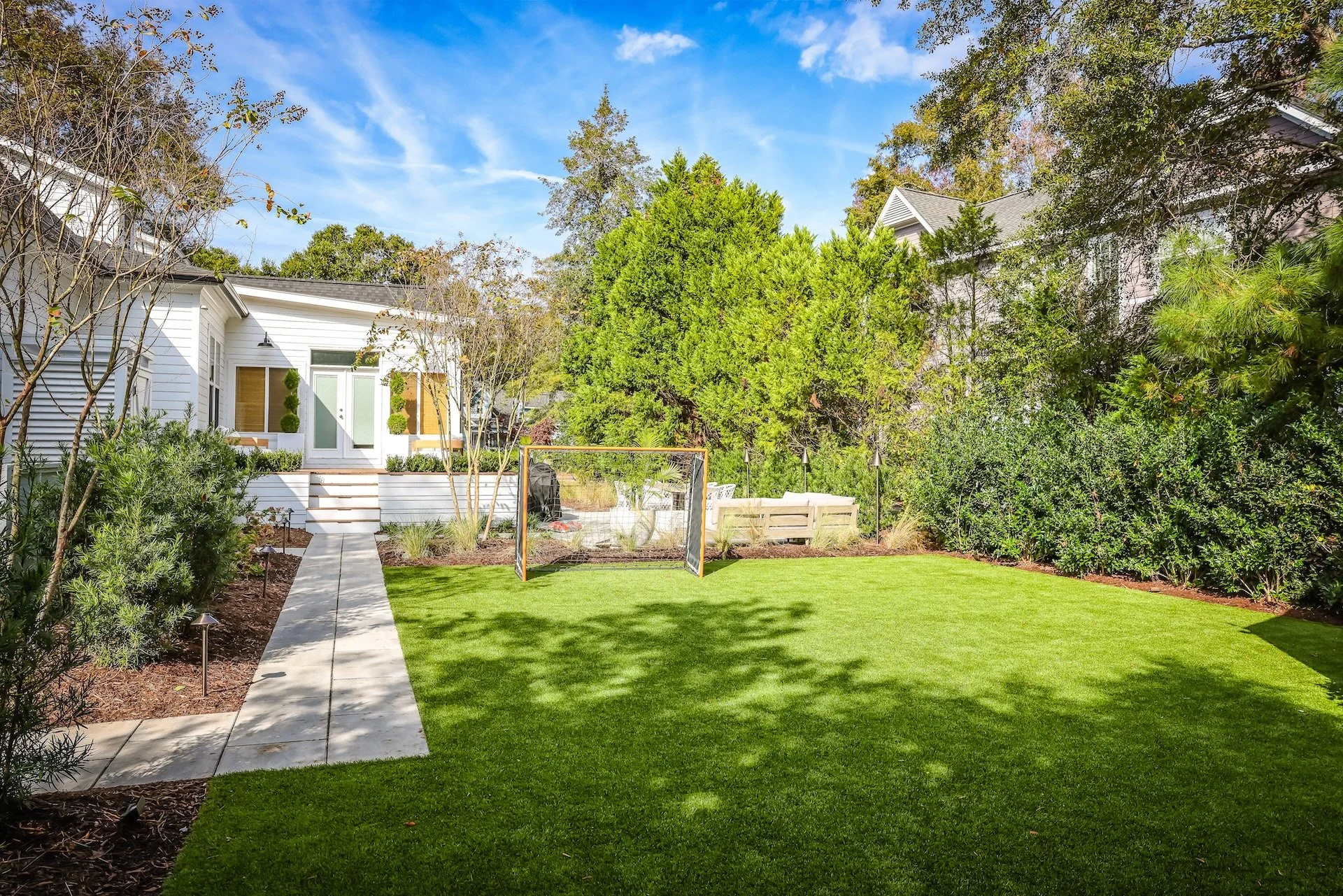
Most people consider artificial turf because they are tired of mowing. That is a fair reason. But the case for it in coastal North Carolina goes deeper than convenience.
The Wilmington area throws a lot at a lawn. Sandy soil that drains fast but holds almost no nutrients. Salt air that stresses turf grass over time. Summer heat and humidity invite fungus, chinch bugs, and brown patch even when the irrigation is dialed in. Maintaining a natural lawn here is not impossible, but it is constant. And for certain areas of the yard, artificial turf simply performs better with less effort.
Related: Why More Homeowners Choose Landscaping & Artificial Turf in Hampstead, NC, for Effortless Style
Where It Makes the Most Sense
Artificial turf is not an all-or-nothing decision. Most of the installations we see work best when they are targeted, used in specific zones where natural grass struggles or where function matters more than traditional landscaping.
High traffic areas are the most obvious example. Side yards that double as dog runs. Play areas that turn to mud after a week of rain. Patches under mature trees where shade and root competition make it nearly impossible to grow anything green. These are spots where turf grass fights a losing battle no matter how much fertilizer or water you throw at it.
Turf also works well in courtyard spaces, rooftop patios, and tight areas between structures where mowing is impractical and irrigation access is limited. In those situations, artificial turf delivers a clean, consistent surface without the maintenance overhead.
What the Installation Actually Involves
A good artificial turf installation is more than rolling out a mat and pinning it down. The base preparation determines whether the surface drains properly, stays level, and holds up over time.
In the Wilmington area, drainage is rarely the issue. Sandy soils move water quickly. But that same loose structure means the base needs to be excavated, compacted, and graded with precision so the turf does not shift or develop low spots that collect standing water during heavy rains.
A proper installation includes a crushed stone base layer compacted in lifts, a weed barrier, infill material that supports the turf blades and keeps the surface cool, and secure perimeter edging that prevents the turf from creeping or separating over time. Seaming matters too. Poorly joined sections show lines, buckle in heat, and peel apart with use.
When the base and seaming are done correctly, the surface looks natural, drains well, and holds up through coastal storms and summer heat without fading or unraveling.
Related: Transform Your Coastal Backyard With Artificial Turf in Carolina Beach & Kure Beach, NC
What It Does Not Replace
Artificial turf is a tool, not a total replacement for your landscape. It works best when it is designed into the space alongside natural plantings, hardscape, and proper grading. A yard that is entirely synthetic rarely looks or feels right. But a yard that uses turf strategically, in the spots where it solves a real problem, looks intentional and functions better than one that relies on grass alone.
The key is planning it as part of the larger design rather than treating it as an afterthought. When it is integrated from the start, it becomes one of the lowest-maintenance and highest-performing surfaces on the property.
Turf works best when it is part of the plan, not an afterthought. Let us look at your property and show you where it fits.
Related: Outdoor Living & Landscape Design Spaces for Landfall, NC, Homes: Ideas to Inspire Your Backyard