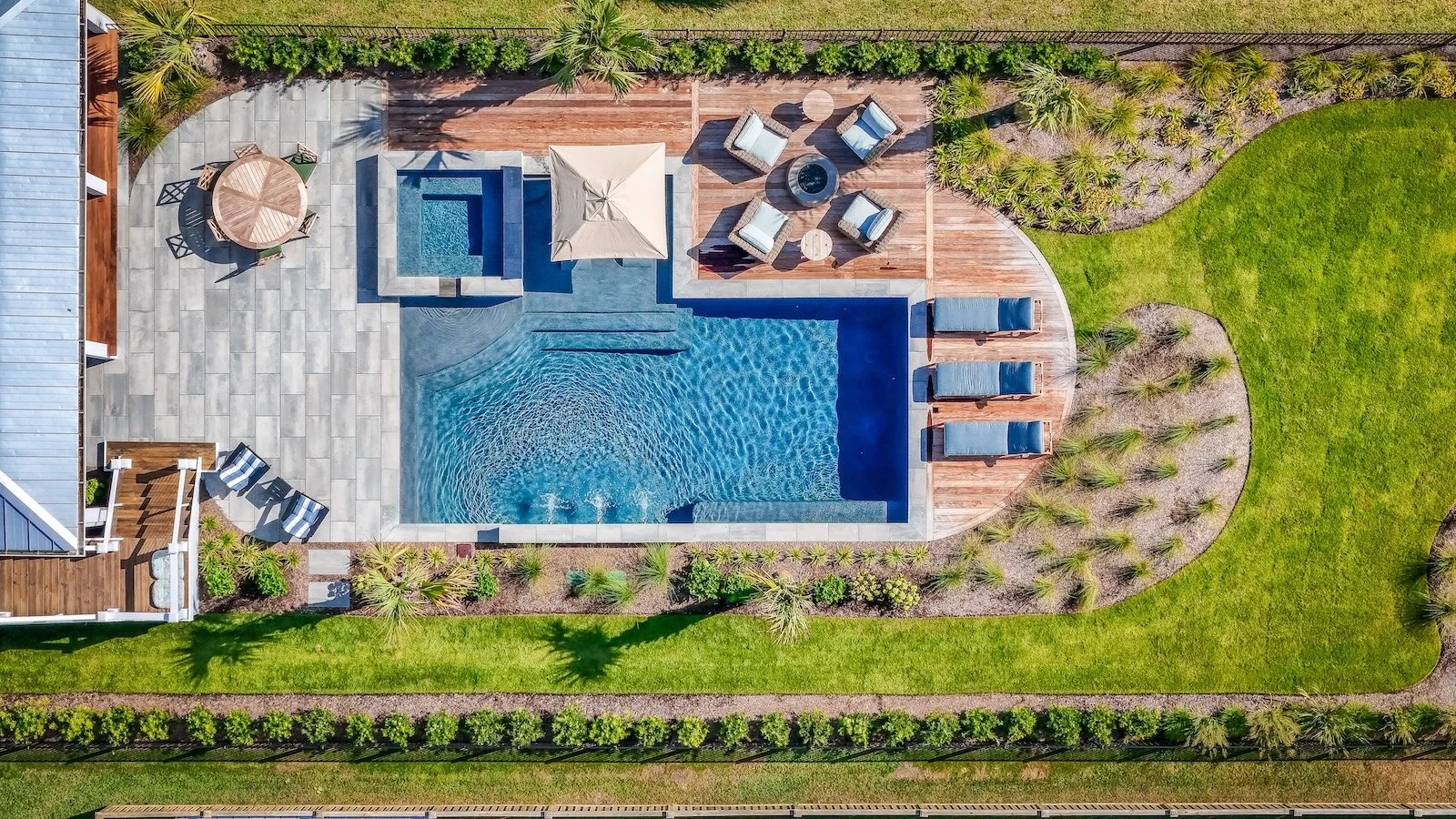
The spa is the part of a pool and spa build in Wilmington, NC that has to be settled earliest and gets discussed last. It shares a wall with the pool, it is formed in the same gunite pour, and its plumbing, heating and controls are designed alongside the main body instead of added to it.
By the time a homeowner is choosing tile, the spa questions have already been answered. Element Outdoor Living has designed and built outdoor spaces across the Greater Wilmington area since 2013.
Most gunite pools here take 10 to 16 weeks between excavation and final detailing, and the spa decisions sit at the front of that run, which is why we raise them during design instead of leaving them until the shell is being shot.
Related: What a Custom Swimming Pool Builder Settles Before Anything Is Poured in Wilmington, NC
Should a Spa Sit Raised or Flush With the Pool?
A spa can sit raised above the pool or flush with it, and the choice belongs in the first design conversation. A raised spa sits above water level and spills back into the pool, which gives a visible water feature and a seat height edge to sit on.
A flush spa reads as part of the same surface and keeps sight lines clean across the yard.
The choice changes the structure, the coping detail and the sound the space makes, so it shapes the drawings for everything around the water, including the deck and the planting beds that frame it.
Should the Spa Share the Pool Equipment?
Shared systems are simpler, and separate systems are more usable. On a shared pad the spa draws from the same pump and heater as the pool, so heating the spa means bringing a portion of the pool circuit up with it.
Separate equipment costs more at install and lets the spa reach temperature in half an hour on a February evening.
How often the spa will be used in winter settles the answer, and that decision has to be made before the plumbing runs are laid out, because it sets how many lines leave the shell.
What Does a Coastal Site Change About a Spa?
Salt in the air is the main change a coastal site brings. Materials, drainage and construction methods get selected for sun, salt, storms and long coastal seasons, and that shows up in the hardware around a spa more than anywhere else.
Rails, jets, covers and equipment housings take the worst of it. Specifying marine grade components is the difference between a spa that looks right at year two and one that does not, and properties on Wrightsville Beach, Figure Eight Island or Carolina Beach see that difference sooner than those further inland.
Related: Inground Pool Installation in Wilmington, NC: What Each Stage of the Build Commits You To
How Does a Spa Change the Deck Around It?
A spa concentrates traffic on the deck around it. People move between the spa and the house far more often than between the pool and the house, usually in bare feet and usually after dark.
That route wants a surface that stays cool and does not get slick, such as travertine, limestone or coastal pavers, plus outdoor lighting that works at low level and a sheltered spot for a towel within reach.
Those are decking and poolscape decisions driven entirely by the spa, and they are far simpler to settle on the drawing than to retrofit once the deck is down.
What Pool and Spa Decisions Should Be Settled Before Excavation?
Spa position, height, jet count and seating layout, the equipment approach, and whether a cover will be used should all be settled before excavation. Each of those is formed into the shell or trenched before the deck goes down.
Finishes, water color, lighting scenes and furniture can all wait. Separating the two lists early keeps the pressure on the decisions that cannot be revisited, and leaves the visible choices for later in the build, when the homeowner can see the shell in the ground.
Settle Your Pool and Spa Design While It Is Still Open
The spa is a small share of the budget and a large share of how often the space gets used through the cooler months.
Settling it early means the shell, the equipment and the deck all arrive designed for the way the household plans to use them.
Element Outdoor Living designs and builds custom gunite pools, spas and full poolscapes for homes across Wilmington and the surrounding coast, with the decking, lighting and planting handled by the same team.
Reach out and we will walk the site with you. Book your pool and spa design consultation with Element Outdoor Living.
In Summary
Can a spa be added to a pool after the shell is poured?
A spa cannot be added to a poured pool in any straightforward way. A spa shares the structure, the plumbing and usually the equipment pad with the pool, so it is formed at the same time, and adding one later means a second shell, a second set of lines and breaking into finished decking.
Does a spa need its own heater and pump?
A spa needs its own heater and pump only if it will be used often on its own. A shared system is simpler and less expensive to install, while separate equipment lets the spa heat without bringing the pool up with it, so anyone intending to use the spa through a coastal winter usually wants the second option.
How much does a spa add to the running of a pool?
Heating is the main running cost a spa adds, and the heater does most of the work. Element Outdoor Living recommends a well fitted cover, which makes the single largest difference, because the heat lost overnight from an uncovered spa is far greater than anything the pump accounts for.
Related: What a Swimming Pool Company Handles After the Water Goes In: Your First Season in Wilmington, NC