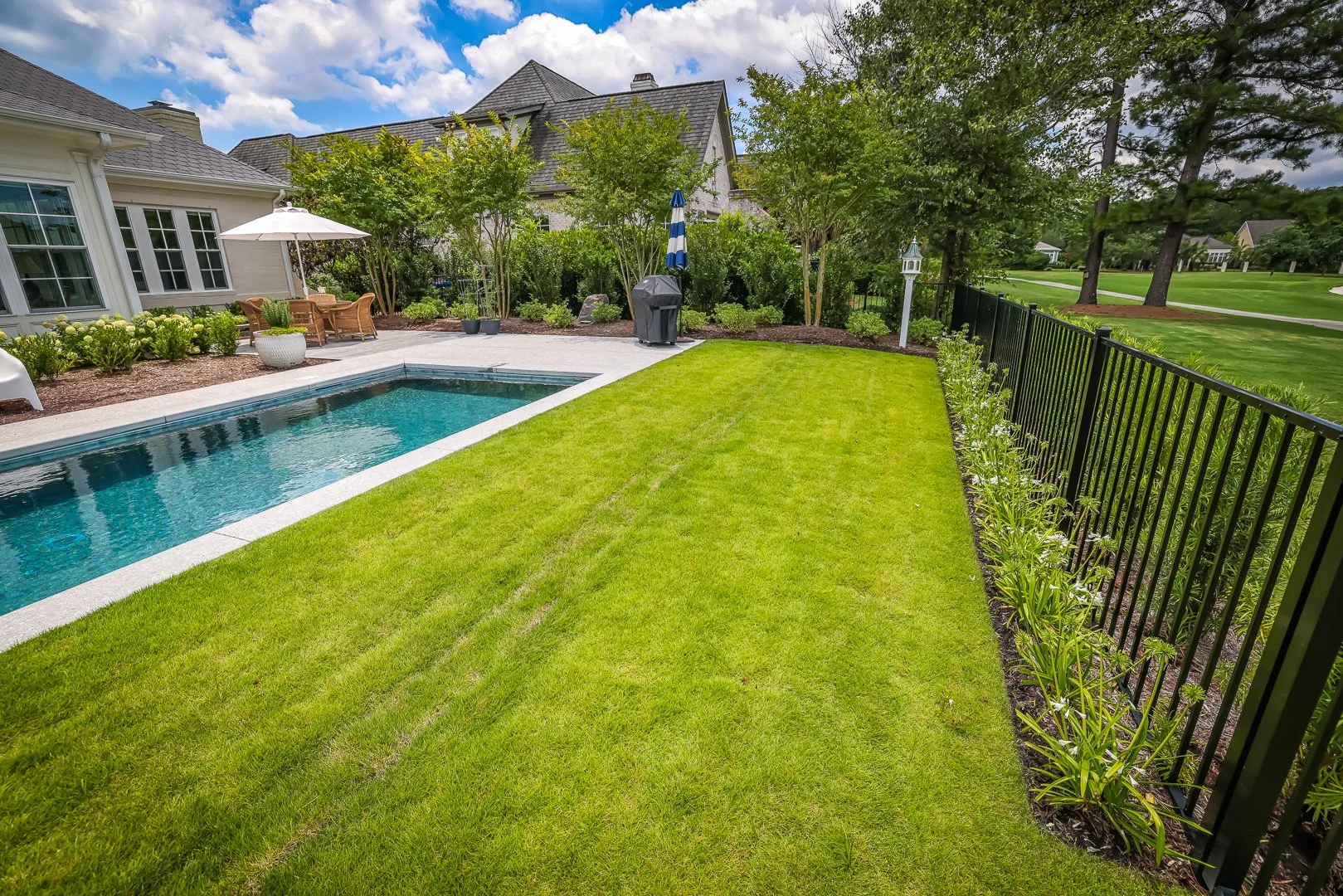
Lawn care in Wilmington, NC, requires a close understanding of water, soil and turf health. Heavy rain affects more than the surface of your yard. It changes oxygen levels in the soil, exposes grading issues, weakens grass roots, encourages disease and reveals where your lawn needs a more complete maintenance plan.
Coastal properties often deal with flat terrain, sandy soils, compacted areas, high humidity and intense growing seasons. When rain moves through the property properly, turf recovers faster. When water sits too long, your lawn starts showing stress in visible and hidden ways.
Element Outdoor Living’s lawn care specialists look beneath the surface to identify what your turf needs after heavy rain. Our team evaluates drainage patterns, soil conditions, irrigation performance, turf health and routine maintenance needs, then manages the ongoing care that keeps your lawn healthier through Wilmington’s wet, humid seasons.
Related: Lawn Care Strategies That Help Wilmington, NC, Lawns Thrive Year-Round
Why Heavy Rain Stresses Your Lawn
Grass roots need oxygen. When soil stays saturated after a storm, water fills the small air spaces between soil particles. Roots struggle to breathe, and turf begins to thin, yellow or develop soft, muddy patches.
Standing water also encourages fungal activity. Wilmington’s warm, humid climate creates ideal conditions for lawn diseases after long wet periods. You may notice brown patches, thinning areas, weak growth or a spongy feel underfoot.
Heavy rain also washes nutrients out of the root zone. Sandy coastal soils drain quickly in some areas, while compacted or poorly graded sections hold water too long. That uneven movement creates lawns with mixed results: one area dries out fast, while another stays wet for days.
Drainage Shapes Turf Health
Drainage is one of the most important factors in a healthy lawn. Our specialists study how water enters, moves across and exits your property.
After heavy rain, the lawn tells a clear story. Low spots collect water. Soil washes away from exposed areas. Edges near hardscapes stay saturated. Downspouts may release too much water into one section of turf.
A strong lawn care plan looks at these patterns before choosing treatments. Turf decline often returns when drainage problems remain unaddressed. Our team evaluates grading, soil conditions, irrigation zones, hardscape runoff and plant bed placement to understand the full picture.
Healthy turf begins with proper water movement. When drainage supports the lawn, mowing, fertilization, weed control and plant health care deliver better results.
Soil Conditions Matter After Storms
Soil is the foundation of your lawn. After heavy rain, soil texture and compaction determine how well the turf recovers. Compacted soil limits root growth and slows drainage. Sandy soil may lose nutrients quickly. Low organic matter reduces the lawn’s ability to hold the right balance of water and air.
Our experts use soil observations and testing to guide the care plan. The results shape turf treatments, amendments and scheduling. A lawn that looks weak after every storm often needs more than surface-level care. It needs soil support that strengthens root development and improves consistency across the property.
Soil health also affects irrigation decisions. Rain does not remove the need for smart irrigation management. In some areas, irrigation schedules need adjustment after wet weather. In other areas, fast-draining soils may need ongoing monitoring once the heat returns.
Related: How Landscaping & Lawn Care in Myrtle Grove, NC, Shapes a Healthier Coastal Yard
Turf Health Requires Routine Oversight
Routine lawn care creates a record of how your turf responds over time. Our team monitors mowing height, seasonal growth patterns, weed pressure, disease activity, irrigation performance and drainage concerns during regular visits.
In Wilmington, warm-season grasses grow most actively during the hotter months. That growth requires consistent mowing, edging, pruning coordination, turf treatments and plant health care.
During slower months, the lawn still needs observation. Brown winter turf often hides drainage patterns, soil compaction and areas that need attention before the next growing season.
Our specialists recognize small changes before they become larger lawn problems. Thin areas, recurring weeds, soft ground, discoloration and runoff patterns all give important clues about turf health.
Your Service Partnership for a Healthier Lawn
When you hire our team for routine lawn care, you receive more than mowing and edging. You gain specialists who understand the relationship between turf, soil, drainage, irrigation and the surrounding landscape.
We assess your property during regular visits and bring issues to your attention. Our team manages mowing schedules, turf treatments, pruning, mulch or pine straw needs, irrigation observations, plant health care and seasonal adjustments. The goal is a lawn and landscape that receive consistent professional attention instead of reactive fixes after each storm.
Heavy rain exposes what your lawn needs. With the right drainage insight, soil care and routine maintenance, your Wilmington lawn develops stronger roots, better growth and a more consistent appearance throughout the year.
Tired of battling a soggy yard? Reach out to our lawn care experts at Element Outdoor Living to schedule a consultation.
Related: How Coastal Conditions Shape Lawn Care in Myrtle Grove, NC, & Kure Beach, NC